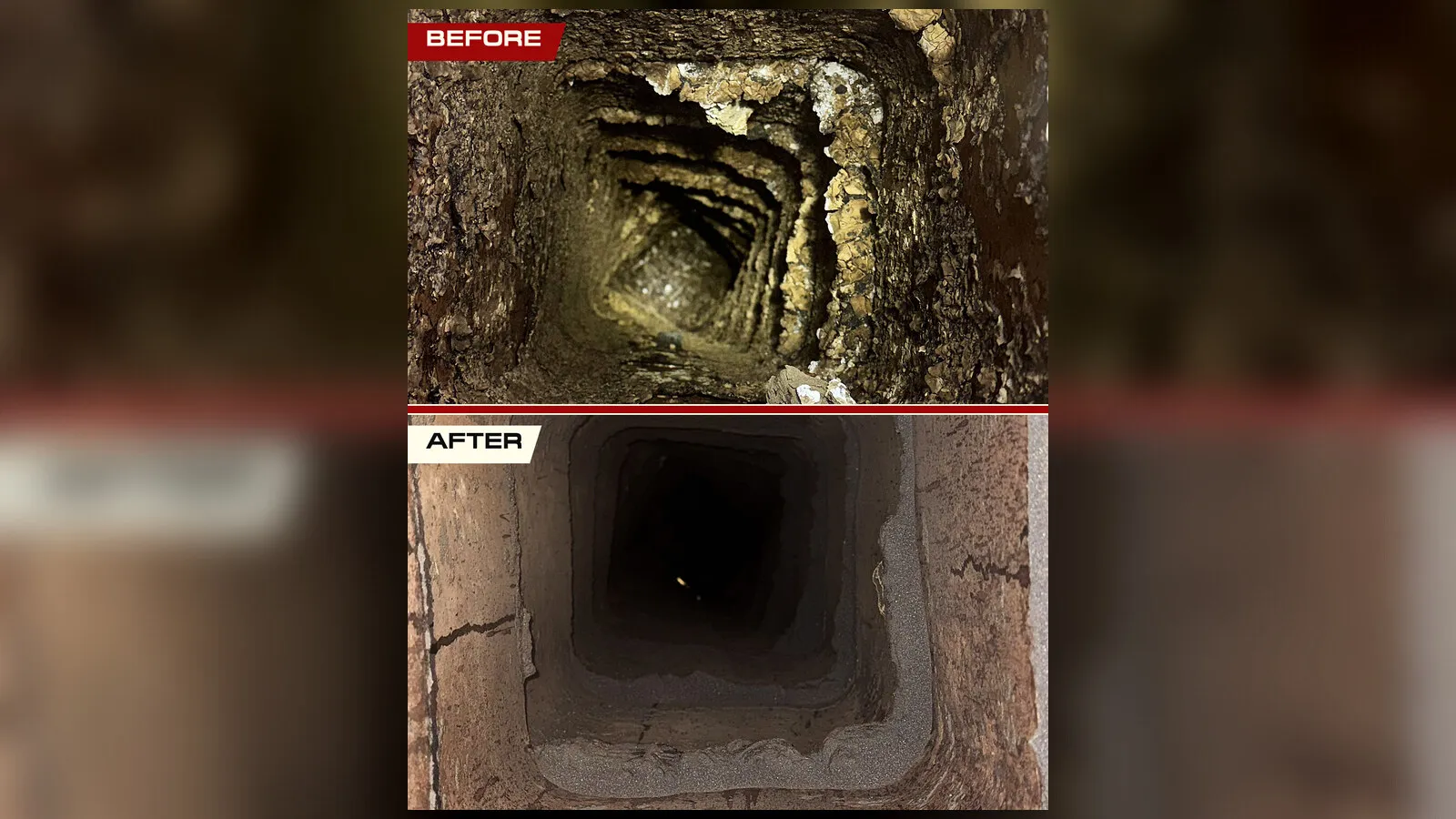
Every wood fire sends unburned fuel up the flue as smoke. The flue is cooler than the fire, so part of that smoke condenses on the walls and stays there. That deposit is creosote, and it is the reason chimneys are swept. What most homeowners do not know is that creosote comes in three stages, and only the first two are a cleaning job.
Stage one: soot
A dry, dusty, flaky layer, grey to black, that comes off with a brush. This is what a flue looks like after a season of hot fires with well-seasoned wood and a damper that was open all the way. A normal sweep removes it in under an hour and the flue is back to bare masonry.
Stage two: crust
Harder, darker, and stuck to the wall in ridges. It builds when fires burn cool or the wood is damp, which in the Hill Country usually means oak that was split last spring instead of two winters ago. Brushes alone do not always take it off. We use rotary heads with chains or steel whips, which takes longer and costs more than a plain sweep, but it still ends with a clean flue.
Stage three: glaze
Shiny, tarry, sometimes running down the wall like melted plastic. Glazed creosote is concentrated fuel. It ignites around 900 to 1100 degrees, which a normal fire reaches without trying, and a chimney fire in a glazed flue can crack a liner or set the framing behind the masonry alight. Brushing does nothing to it. The options are a chemical modifier applied over several burns to break the glaze down into something removable, or removing and replacing the liner.
How to tell which one you have
Open the damper, put a flashlight up the flue and look at the walls above the smoke chamber.
- Dusty and grey: stage one, book a normal sweep.
- Ridged, hard, matte black: stage two, say so when you call so the crew brings the right heads.
- Shiny, tacky or running: stage three, stop burning until someone with a camera has looked at the whole flue.
- You cannot see the walls at all because the damper will not open: that is its own problem, and it is usually rust from water coming down the flue.
Why it builds faster in some houses
- Unseasoned wood. Wet wood burns cool and smokes, and smoke is what condenses.
- Slow, banked fires, especially overnight burns in a wood stove.
- An oversized flue for the firebox, which lets smoke cool too fast on the way up.
- An exterior chimney on the north wall of the house, which is colder than one running through the middle.
- A fireplace used ten evenings a year: a season of light use with a cold flue can still leave a crust.
What we do on a sweep
We drop cloths first, then sweep the flue, the smoke chamber and the firebox, vacuum everything out, and photograph the flue before and after, so you see the stage you were at rather than take our word for it. If we find stage three, we say so on the spot and quote the real fix instead of sweeping it and calling it done. Our owner is a CSIA Certified Chimney Sweep, and the inspection that comes before all of this is free.
Free inspection with photos across Marble Falls, Georgetown, Leander, Lakeway and the Hill Country. Call +1 (737) 299 19 19 or book online.
Chimney Cleaning.



