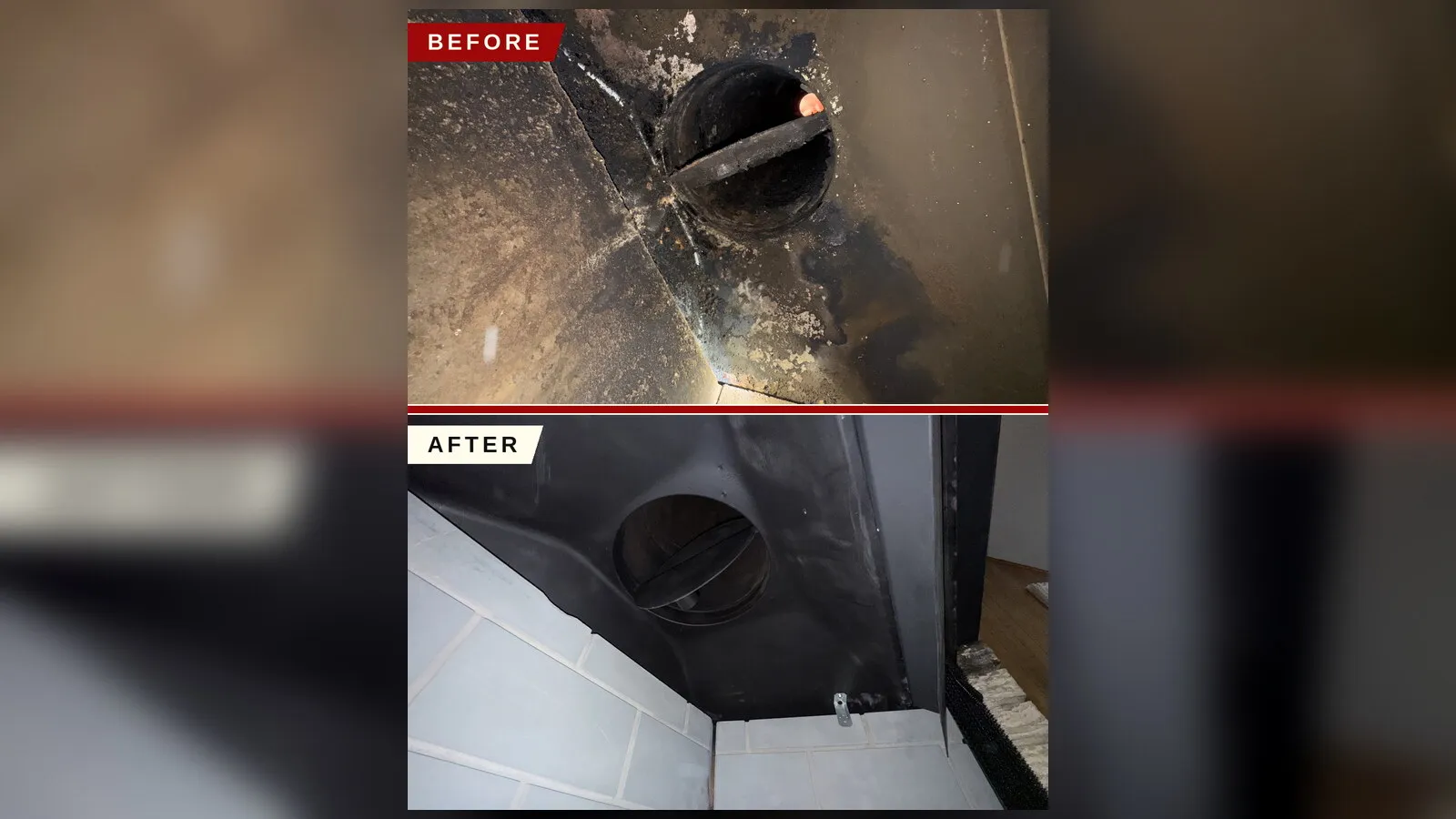
A chimney is a hole in your roof with a fire at the bottom. Everything above the shingles exists to keep rain out of that hole. When homeowners call us about a stain on the ceiling near the fireplace, or a damper that will not move, the cause is almost always one of three parts, and none of them are visible from inside the house.
The cap
The cap is the metal lid over the top of the flue, usually with a screen on the sides. It keeps rain, leaves, birds and squirrels out. Caps rust, they get blown off in storms, and on many Hill Country houses there was never one to begin with. Without a cap, every rain sends water straight down the flue onto the damper and the smoke shelf. That is where rusted-shut dampers and the metallic smell after a storm come from, and it is the cheapest of the three to fix.
The crown
The crown is the sloped concrete or mortar slab on top of the masonry, around the flue tile. Its job is to shed water off the top of the chimney. Crowns crack, because concrete moves and Texas heat is hard on it. Once cracked, water gets into the brickwork and into the space between the flue liner and the masonry. Through a few freeze cycles that becomes spalling brick and loose mortar joints. A crown repair while it is a crack is a morning of work. A rebuilt chimney top is a different order of money.
The flashing
Flashing is the metal that ties the chimney to the roof plane. It is layered, sealed and usually the first thing a roofer does badly. Failed flashing does not show up on the chimney at all. It shows up as a damp patch on the ceiling a foot or two away from it, which is why it often gets blamed on the roof in general.
What you can check from the ground
- Look at the top of the chimney with binoculars or a phone camera zoomed in. Is there a cap? Is it sitting straight and does it still have its screen?
- Look for dark streaks running down the masonry below the crown. That is water tracking.
- Inside, open the damper. Grinding, dropping or refusing to hold position usually means rust, and rust means water.
- Look at the ceiling and the wall on both sides of the chimney for old stains, even dry ones.
- After a hard rain, smell inside the firebox. A strong wet-ash smell means water is getting in.
Why it matters more than it sounds
Water is the main destroyer of masonry chimneys, and the damage compounds quietly. A twenty dollar screen missing from a cap leads to a nest, which leads to a blocked flue, which leads to smoke in the room or carbon monoxide. A hairline crown crack leads to spalled brick and a rebuild. Almost every expensive chimney job we quote started as one of these three parts left alone for a few seasons.
What we do
The free inspection includes the roof: we photograph the cap, the crown and the flashing and show you the pictures, so you are deciding from evidence rather than from a description. We fabricate and install caps, repair and re-cast crowns, repoint the brickwork and seal flashing, and everything is priced in writing per line before any of it starts.
Free inspection with photos across Marble Falls, Georgetown, Leander, Lakeway and the Hill Country. Call +1 (737) 299 19 19 or book online.
Chimney Repair.



